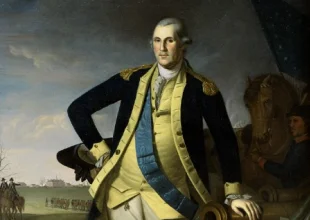
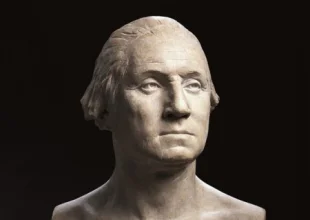
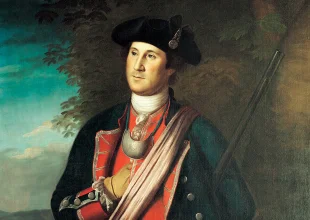
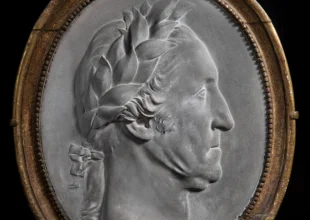
George Washington was commander in chief of the Continental Army, president of the Constitutional Convention, and the first President of the United States.
Here, explore his life from his youth in Virginia and early military career through the American Revolution, presidency, retirement at Mount Vernon, death, and enduring legacy.
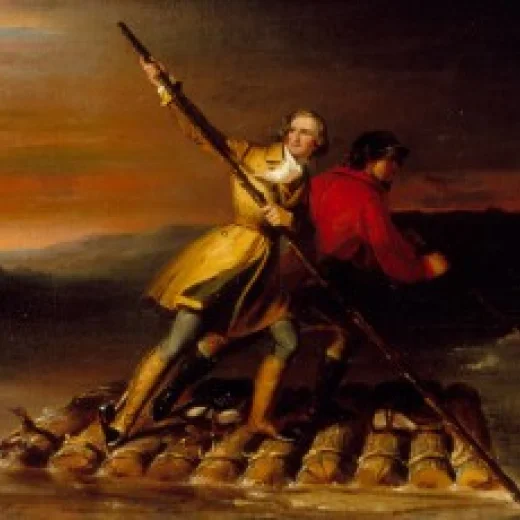
George Washington's experiences in his youth helped shape the man who would lead a revolution and become the first president of the United States.
Denied a formal English education, Washington developed practical skills and discipline through early schooling and self-study.
After the death of his father, when Washington was only 11, he inherited enslaved people.
Washington’s surprise attack on a small French force helped spark the French and Indian War.
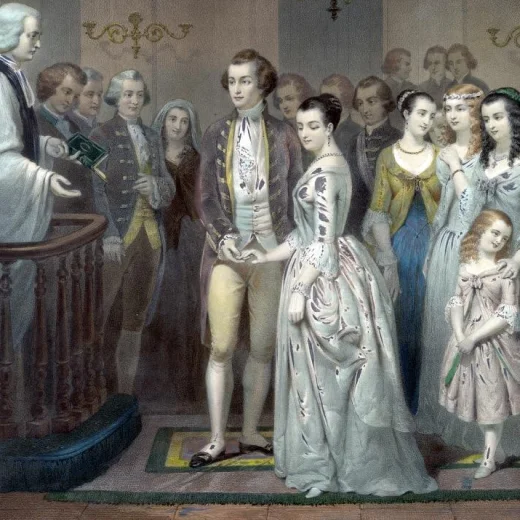
Washington’s growing leadership in Virginia’s civic and political life transformed him from a planter into a respected public leader.
Washington embraced the role of a gentleman farmer, experimenting with innovative practices to make Mount Vernon more efficient and profitable.
Washington’s 17 years in the Virginia legislature helped him build important connections and learn the legislative process.
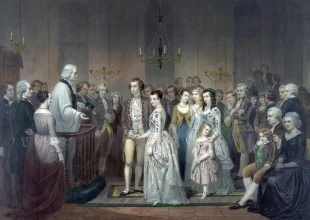
His marriage to Martha Dandridge Custis formed a partnership that strengthened Washington’s path to success.
As a member of Virginia’s gentry, Washington took a leadership role in the Anglican Church.
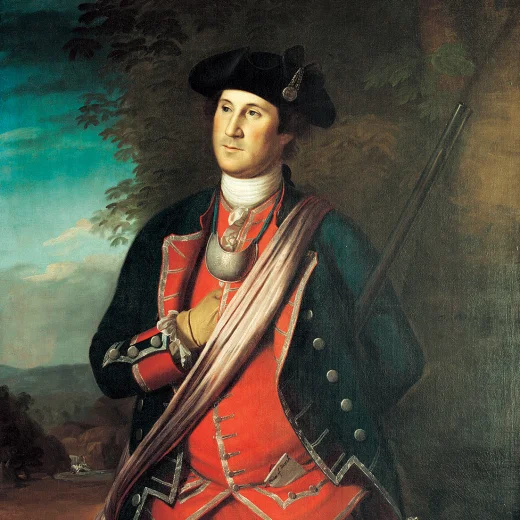
Washington’s growing frustrations with British rule—shaped by wartime experience, economic restrictions, and fears of political corruption—transformed him from a loyal subject into a committed patriot.
A close examination of his writings provides many clues as to why Washington joined the Revolutionary War.
Early military service planted the seeds of Washington’s growing disillusionment with imperial rule.
A British proclamation fueled Washington’s frustrations as he struggled to secure lands promised for his military service.
Explore how Britain’s punitive measures pushed leaders like Washington closer to revolution.
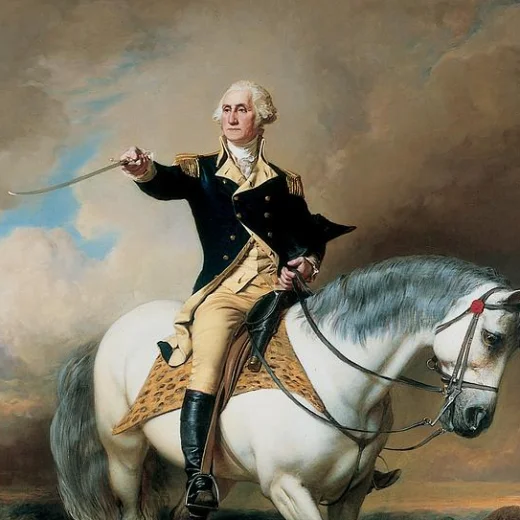
Washington’s leadership during the Revolutionary War transformed a diverse army drawn from 13 colonies into the force that defeated one of the world’s most powerful militaries.
Follow Washington in real time as he takes command of the Continental Army and leads the fight for liberty against Great Britain.
General Washington was central in securing America's independence.
Explore a fascinating selection of weapons, accoutrements, and gear that Washington used over the course of the Revolution.
At Yorktown, with crucial French support, Washington’s army defeated British forces and secured the victory that led to American independence.
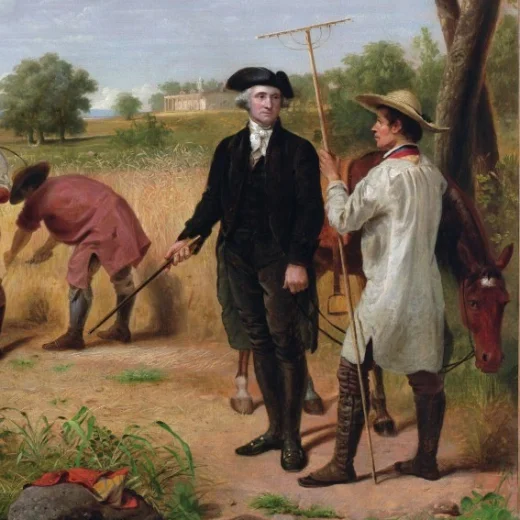
After the Revolution, Washington returned to Mount Vernon to pursue agricultural innovation and build his reputation as a leading American farmer, relying on enslaved labor to sustain the plantation.
Washington experimented with crop rotation, livestock breeding, and other innovations to promote a more efficient and sustainable American agriculture.
Although they had no biological children, George and Martha Washington raised a large, extended family at Mount Vernon.
Washington relied on the labor of enslaved people at Mount Vernon, where their work sustained his household, farms, and livelihood.
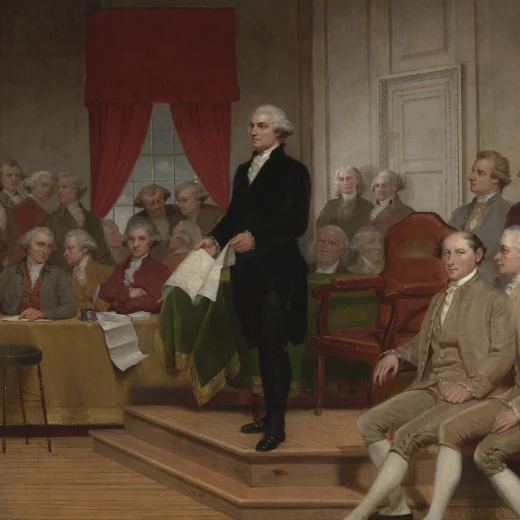
From linking the nation’s waterways to shaping its government, Washington helped unite the states and lay the foundations of American democracy.
Washington promoted improving the Potomac River to strengthen economic ties and preserve the unity of the young nation.
Concerned about competing state interests, Washington hosted the Mount Vernon Conference, helping lay the groundwork for greater cooperation among the states.
Called out of retirement as the union faltered, Washington presided over the Constitutional Convention, where delegates forged a new government.
![George Washington intentionally did not sit for this presidential era portrait while wearing military attire. He wanted to emphasize the Office of the President's civilian nature. - George Washington, Gilbert Stuart, ca. 1796. [NPG.2001.13]. Courtesy National Portrait Gallery, Smithsonian Institution.](https://mtv-main-assets.mountvernon.org/files/styles/gw_timeline/s3/resources/gilbert_stuart_george_washington_lansdowne_portrai.jpg.webp?VersionId=SECJTkOyBmjra5qNPSvv9.9ZGrqc3XyD&h=356e0de8&itok=gAv_Lwa1)
Unanimously elected twice, Washington shaped the presidency by establishing key precedents and carefully balancing effective leadership with a clear rejection of monarchical power.
Everyone expected Washington to win the first election in 1789. But an important question remained: Would he accept the job?
As the nation’s first president, Washington faced the challenge of setting lasting precedents.
Washington’s Farewell Address stands today as a timeless warning about the forces that threaten American democracy.
![An artist's depiction of George Washington's final moments. - Life of George Washington: The Christian, lithograph by Claude Regnier, after Junius Brutus Stearns,1853. Gift of Mr. and Mrs. Robert B. Gibby, 1984 [WB-55/A1], Mount Vernon Ladies' Association, Mount Vernon, VA.](https://mtv-main-assets.mountvernon.org/files/styles/gw_timeline/s3/resources/ct-6515-6.jpg.webp?VersionId=n3LmGF7UD6DgcDwX24O4jf6Va1OPX8m_&h=276fa4ed&itok=cewwSS3J)
In his final years at Mount Vernon, Washington cemented a legacy that would endure far beyond his lifetime.
Less than three years after retiring from office, Washington’s sudden death shocked the nation he helped forge.
In his final act, Washington arranged to free the people he enslaved, ending slavery for many at Mount Vernon.
George Washington Facts
| Born: | February 22, 1732, at Popes Creek, Virginia |
| Died: | December 14, 1799, (age 67) at Mount Vernon |
| Married: | Martha Dandridge Custis on January 6, 1759 |
| Presidency: | April 30, 1789, to March 4, 1797 |
| Children: | None |
| Height: | 6' 2" (1.879m) |
| Weight: | 174lbs (79kg) in 1760 |
| Religion: | Anglican/Episcopalian |
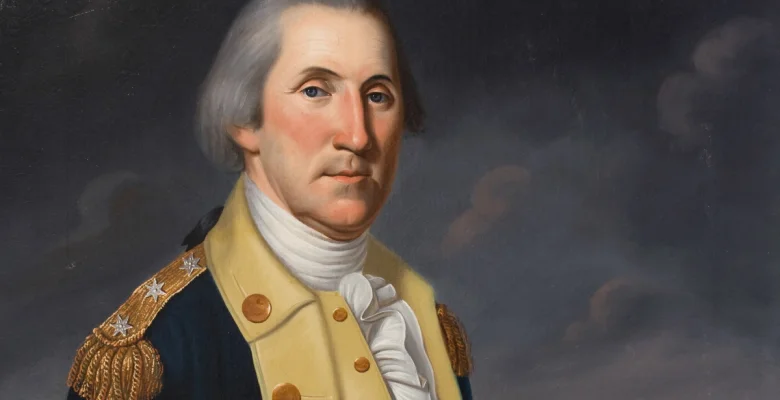
George Washington
10 Things You Should Know
![The West Front of Mount Vernon by Edward Savage c.1787-1792, MVLA, Bequest of Helen W. Thompson, 1964 [H-2445/B]](https://mtv-main-assets.mountvernon.org/files/styles/feature_image_link_list/s3/callout/text-image-block-full/image/savage-the-west-front-of-mount-vernon-web-6.jpg.webp?VersionId=ZGj3ap4sYId2J08q_k8aa7609anMS6Vq&itok=XQDhF0UD)
Mount Vernon
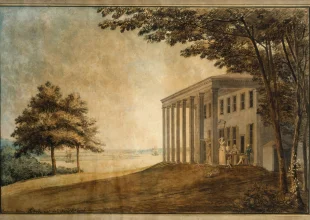
Washington’s Mount Vernon estate was both his home and a symbol of his life’s work. He managed it with innovation and care, balancing his roles as a farmer, statesman, and family man.
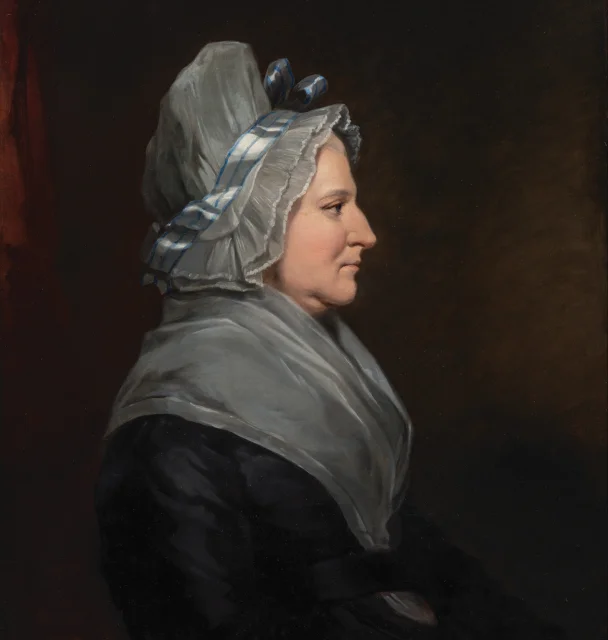
Martha Washington
Martha Washington was the first first lady of the United States and spent about half of the Revolutionary War at the front with General Washington. She helped manage Mount Vernon and raised her children, grandchildren, nieces, and nephews.
George Washington's Legacy
Washington’s principles shaped the nation’s values of liberty, unity, and civic duty.
He believed in honor, humility, and service over personal gain.
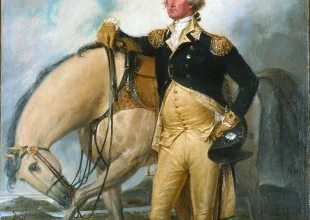
His dignified presence and calm strength became symbols of leadership.
He believed in honor, humility, and service over personal gain.